
Posted by N2 Speed LLC. on Nov 21st 2026
GMC Sierra 1500 Performance Builds and Remote Tuning
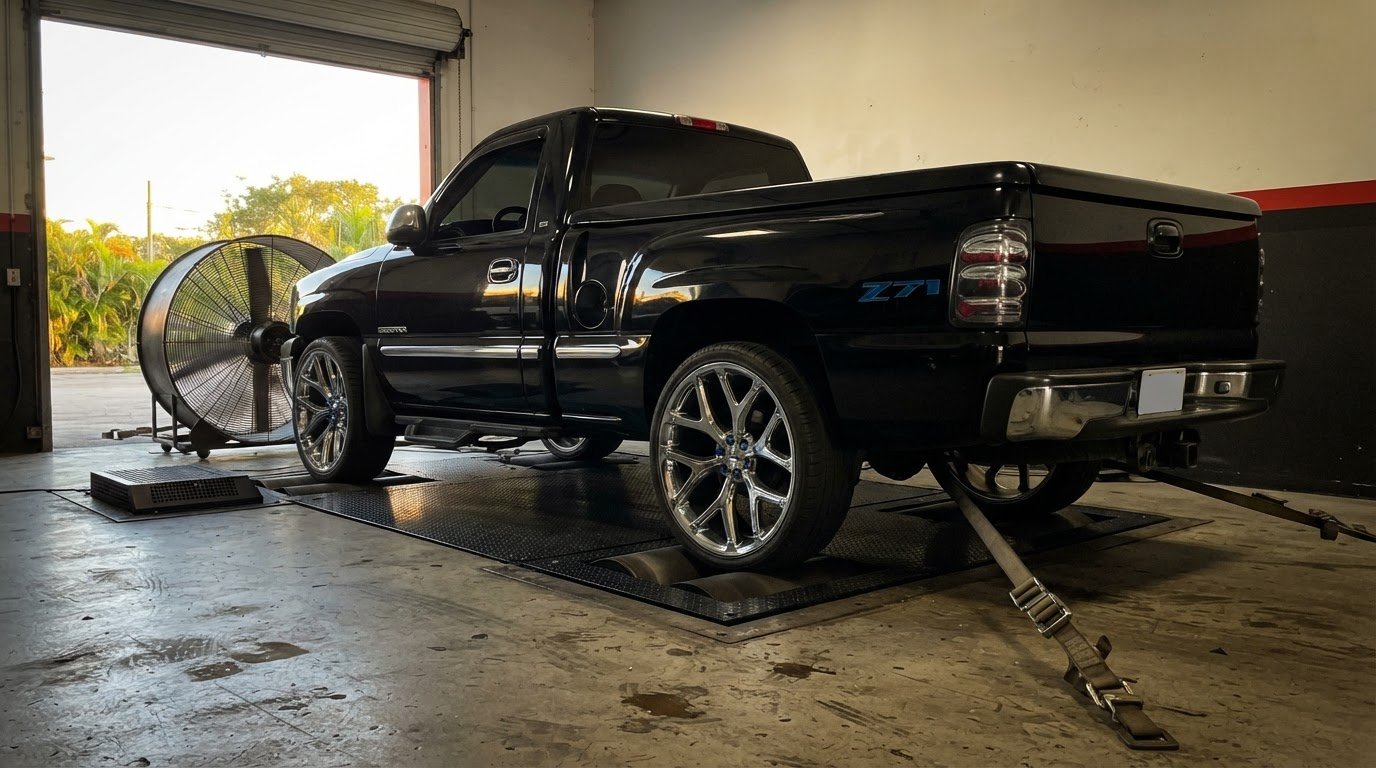
A dyno chart alone doesn't make a Sierra faster; the calibration behind the result matters. Custom dyno tuning uses measured engine performance to guide calibration changes, helping shape horsepower, torque, and drivability around the truck’s setup.
It makes sense to want stronger output without losing the response and operation you rely on every day. A Sierra’s engine, transmission, existing modifications, and intended use all influence how a performance build should be calibrated, so a result from another truck isn't a reliable template.
This guide explains how dyno-based calibration informs a build, which factors affect power delivery, and what to consider when tuning Silverado and Sierra platforms. You’ll also learn how remote custom tunes and tuning devices fit into the process. Remote tuning is available worldwide, so each approach can suit a different calibration path.
Key Takeaways
- Understand how dyno data guides calibration decisions and why horsepower and torque gains depend on the truck’s setup.
- Identify the engine, transmission, modifications, and intended use that should shape a Silverado or Sierra performance build.
- Compare custom email tunes, tuning devices, and ECU-related services to see how each option fits a different calibration path.
- Learn which project details influence tuning costs without relying on a one-size-fits-all estimate.
Custom dyno tuning
Custom dyno tuning uses measured engine output to inform calibration changes for a specific Sierra. The process connects the truck’s configuration and intended use with observed performance, rather than relying only on a generic file.
A technician begins by recording baseline runs and reviewing the vehicle’s setup. Calibration adjustments can then be evaluated against the dyno results, with repeat runs showing how the truck responds across its operating range. That measured process helps distinguish a change in peak output from broader differences in power delivery.
The goal matters, too. A street-focused Sierra may prioritize throttle response, while a truck used for regular hauling needs predictable power delivery under load. Engine and transmission behavior both affect how the truck drives, so the calibration should suit the build rather than chase one isolated number.
ECU Tuning Services and Options
ECU tuning options include dyno-guided calibration and remote tuning, with the appropriate method shaped by the vehicle platform and project needs. The calibration process depends on accurate details about the Sierra’s configuration and modifications. For an example of remote tuning on Dodge, Ram, and Jeep platforms, the remote tuning process shows how that delivery method is used for those vehicles.
For a Sierra build, the key decision is how its calibration will be developed and applied. Dyno tuning measures output during development; remote tuning follows a different process, using the vehicle’s information and feedback. The truck’s setup and the driving characteristics you want help determine the right approach.
GMC Sierra 1500 Tune Costs
When comparing tuning options, look beyond the label and identify the work involved. Dyno-based development and remote calibration use different processes, and the project may also require programming access or a compatible device. A clear scope connects the work to the truck’s needs.
Check whether the stated scope covers the calibration, module access, and any device required. These are distinct parts of a tuning project, and separating them makes it easier to understand what you need. It also helps keep the work aligned with the Sierra’s configuration.
A dyno measures performance; it does not guarantee a particular output. Results depend on the truck’s setup and calibration. A focused plan gives each change a purpose and makes the vehicle’s response more useful for evaluating the build.
Silverado and Sierra performance builds
A successful Silverado or Sierra build starts with a clear goal and compatible parts. Decide whether the truck is primarily for daily driving, hauling, or sharper street response. Those priorities guide decisions about engine modifications, fueling needs, and calibration.
Tuning and hardware solve different problems. Calibration adjusts control strategies for the engine and transmission, while physical upgrades change the components being controlled. N2 Speed develops custom tune files for specific vehicle models and modifications, including GM platforms. This model-specific approach helps connect calibration choices to the truck’s actual setup, rather than treating one tune as a universal solution.
Build details matter. A Silverado or Sierra with a modified fuel system needs a calibration plan that accounts for those parts. A mostly stock truck may have different priorities. N2 Speed also offers performance fuel systems and tuning devices, giving owners options to support hardware and programming needs within a broader build plan. Matching each option to the project keeps the parts list focused on the intended result.
Relevant tuning experience means understanding the vehicle platform and tailoring calibration to its modifications. N2 Speed specializes in custom calibration for American vehicles, including GM, and develops tune files around the model and installed changes. Reviews can offer context about customer experiences, but feedback about a comparable platform and build goal is more relevant than general praise.
Before work begins, N2 Speed’s tuning process benefits from a precise description of the truck, installed parts, and intended use. That information gives the calibration a defined target and helps align the build’s hardware with its programming. For a project involving programming equipment, N2 Speed’s performance resources can help frame the next step.
GMC Sierra 1500 ECU tuning services and options
ECU calibration changes control strategies to match a Sierra 1500’s engine and installed hardware. Depending on the platform, adjustments may address throttle response, fueling, ignition timing, and torque management. Engine configuration matters from the start because calibration priorities vary between different engine families.
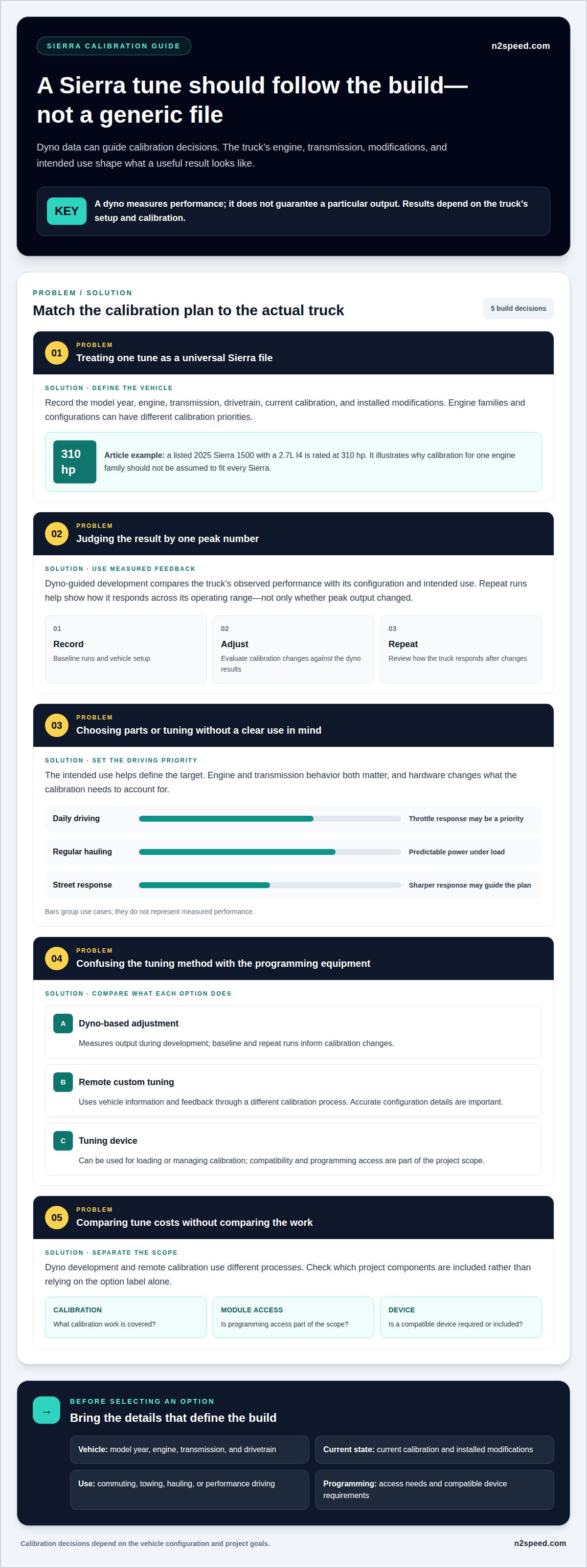
Model year and engine configuration define the calibration context. A listed 2025 Sierra 1500 with a 2.7L I4 is rated at 310 hp. That example shows why a calibration developed for one engine family should not be treated as a universal Sierra file.
Options include a custom tune delivered remotely, a device for loading or managing calibration, and dyno-based adjustment. Remote tuning is available worldwide, and each option requires accurate vehicle details and compatible programming access. Intake or fuel-system modifications can change calibration needs, so the tune should reflect the parts actually installed.
The TCM manages transmission behavior, including shift scheduling and coordination with engine torque. Engine calibration alone may not address a build where shift response is a priority. A Sierra used for regular hauling, for example, may call for different shift behavior than one focused on street performance. Consider engine and transmission calibration as connected parts of the truck’s control strategy.
Before selecting an option, document the model year, engine, transmission, drivetrain, current calibration, and modifications. Include the truck’s main use, such as commuting, towing, or performance driving. These details help determine whether remote calibration, device-based programming, or dyno development better matches the build. Accurate inputs also reduce the risk of applying a file that does not fit the vehicle configuration.
Keep calibration work distinct from hardware changes. A tuning device provides a programming interface; the calibration determines how the control modules operate. The best fit depends on the Sierra’s platform, modifications, access requirements, and desired drivability, not simply the name of the tuning format.
GMC Sierra 1500 tune cost
There isn’t one useful flat figure for every Sierra 1500 tune. The work depends on the truck’s model year, engine, transmission, existing modifications, and calibration method. A stock gasoline Sierra and a modified Sierra need different calibration work, so their quotes may cover different tasks.
Start by separating the quote into its main components. A dyno-based project may include measured runs and calibration revisions, while remote calibration follows a different process. Module access can also matter: some vehicles require PCM or TCM unlocking before programming. A tuning device may be a separate purchase from the custom calibration file, so make sure the scope distinguishes hardware from tuning work.
Several build details can affect what the tuning process involves:
- Engine and model year: A 2.7L I4 and a 6.2L V8 use different engine configurations and calibration requirements.
- Transmission needs: Engine-only calibration differs from a project addressing both PCM and TCM behavior.
- Installed parts: Changes to airflow or fueling can require calibration matched to those components.
- Project method: Dyno development, remote tuning, and device-based programming involve different workflows.
For a useful comparison, provide the same project details each time: year, engine, transmission, drivetrain, modifications, and intended use. Then compare the stated scope, including any module unlocking, calibration work, or device. Separate items are easier to assess than a quote that bundles everything together.
Avoid choosing based only on a low headline price or a promised peak horsepower figure. Find out what calibration work is included and how it accounts for the Sierra’s actual hardware. That makes it easier to compare the work being proposed rather than treating every truck as identical.
For a project involving calibration access or programming hardware, explore tuning options and match the service scope to your Sierra’s configuration.
N2 Speed: Tuning Devices
N2 Speed helps connect a Sierra performance plan with the programming access and calibration it requires. Tuning devices support vehicle programming, while PCM and TCM unlocking services address module access for compatible tuning work.
For a build that needs calibration tailored to its model and modifications, custom e-mail tunes provide a remote tuning option. Performance fuel systems can also support builds where fueling hardware is part of the plan. The right combination depends on the Sierra’s configuration and the intended use, whether the priority is sharper response or a coordinated engine and transmission setup.
Share the truck’s year, engine, transmission, and installed modifications when discussing the next step. That information helps frame the tuning approach around the actual vehicle rather than a generic build. To discuss tuning devices and related options for your project, contact N2 Speed.
Set a Clear Direction for Your Sierra Build
Before choosing a calibration path, define what better drivability means for you. Is your priority smoother throttle response in daily traffic, controlled delivery under load, or calibration for performance modifications? A clear goal gives the project a meaningful measure of success beyond a peak dyno number.
Connect that goal with the truck’s configuration and appropriate programming access. N2 Speed offers PCM and TCM unlocking services, custom e-mail tunes, and tuning devices for different tuning needs. Share the vehicle details and the outcome you want to pursue, then discuss which option best aligns with the build.
Keep the plan focused, make each decision serve the truck’s intended use, and move forward with a calibration approach that reflects your priorities. Start planning your Sierra build with N2 Speed and take the next step with confidence.
Frequently Asked Questions
What remote tuning options are available for a GMC Sierra 1500?
N2 Speed offers custom remote calibration for Sierra owners worldwide. The tuning process is handled by email rather than requiring a dyno shop visit, allowing the tune to be built around the truck’s installed hardware and intended use.
Is dyno tuning required for a GMC Sierra 1500?
If you're looking for Sierra dyno tuning, N2 Speed's option is remote tuning rather than an in-house dyno session. The process uses an exchange of the truck's stock file and datalogs, followed by a custom tune sent by email. This lets the calibration account for measured engine behavior and the vehicle's modifications without requiring a dyno appointment.
What horsepower and torque gains can GMC Sierra 1500 tuning deliver?
A custom tune is designed to improve horsepower, torque, and drivability, but the result depends on the Sierra's engine, transmission, fuel, existing modifications, and baseline condition. A stock truck and one with intake or exhaust changes won't necessarily respond alike. N2 Speed tailors its tune to the specific setup, and before-and-after datalogs help assess how the truck responds.
GMC Sierra 1500 tuning warranty and engine risks
Provide the model year, engine, transmission, drivetrain, current calibration, and modifications so the file matches the truck’s configuration; accurate inputs reduce the risk of applying an incompatible file. The article gives no warranty information.